
One of the most important events in the life of every person is a wedding. Ukrainians have treated this event very responsibly since ancient times, because the creation of a new family included a complex complex of various initiations, folk customs and traditions. Let's take a closer look at Ukrainian wedding rituals.
In Ukrainian culture, in addition to the wedding process itself, there were also pre-wedding rituals: acquaintance, matchmaking, courtship, engagement, etc. Usually, young men and women chose a future couple in their village or city, but there were cases when couples from different localities got married. The places where young people traditionally got acquainted and met were parties with various games and fun, or toloka (group work in the village, where all the residents gathered). Only young people were allowed to attend the parties, because this event was organized specifically for the search and selection of their future husband and wife…
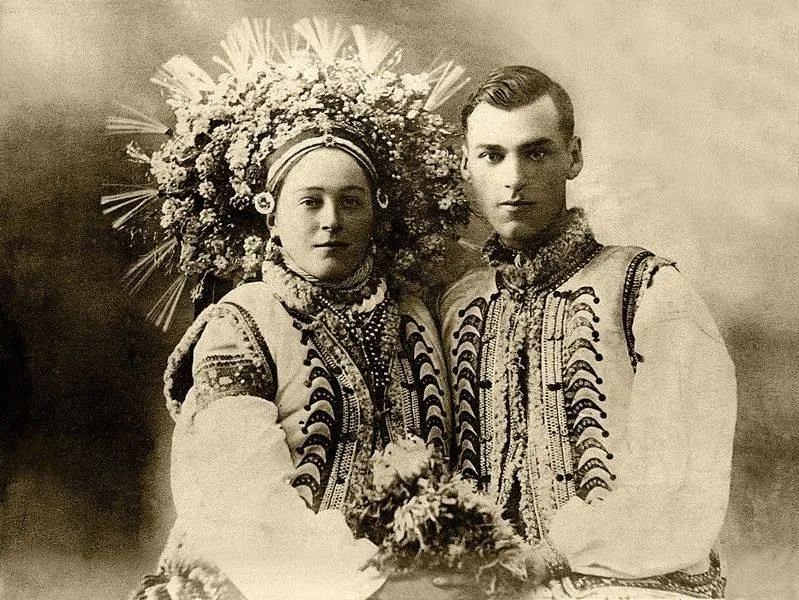
Before wedding parties became common, all decisions related to choosing a couple and the wedding were made and organized by parents, and their children's wishes and will usually had little influence.
In order for a marriage to be legally valid, not only parents and relatives, but also acquaintances, friends, and the bride and groom's communities had a great influence. In the 16th-17th centuries in Ukraine, the legal fixation of marriage was served by "conspiracies" concluded between the parents and relatives of the young in the presence of matchmakers (the so-called "consent") orally. And already from the 17th century, marriage began to be concluded in writing using marriage or marriage certificates. Weddings in the church gradually became a traditional rite, from the 16th-17th centuries, and in some areas in the 18th century.
Matchmaking was the first stage in the marriage ritual. The groom invited the elders (matchmakers) from the circle of close relatives, who in turn took the ritual bread and went to the parents of the future wife to obtain permission for this union. Most often, this ritual was performed late in the evening or at night to maintain secrecy, especially in case of refusal. During the matchmaking, a traditional dialogue was pronounced, which mentioned biblical characters, merchants and goods, a marten-a-beautiful young woman and a hunter. If the parents' answer was positive, the bride tied towels over the shoulders of the elders, and this gesture meant consent to the wedding. If the parents and relatives did not agree, the bride could return the ritual bread to the elders and give the groom a pumpkin or a macogin, which also served as a traditional sign of refusal.
If the matchmaking was successful and both parties agreed to the wedding, the next stage was an «inspection» of the future woman and her home (a kind of household check), as well as an inspection of the groom’s house and his wealth. Some families tried to deceive their matchmakers and borrowed grain, horses, and other items from neighbors that would characterize their high level of wealth.
After the reviews, the "engagement" took place, where the marriage contract was officially sealed. Refusal to marry after the engagement was condemned by the community or even entailed a large monetary penalty.
The next step was to prepare for the wedding itself. Traditionally, weddings were played in the fall, from the Feast of the Protection of the Virgin Mary to the Philippian Lent, that is, from October 1 to November 14, or in the winter, from Epiphany to Shrovetide.
The pre-wedding ceremony began with "promposals," when all the neighbors and relatives came. The bride and groom would enter the house with the words "Mom and Dad asked for bread and salt, and I ask for the wedding," and place a "shishka" (ceremonial bread) on the table.
An integral part of the wedding ceremony was the tradition of saying goodbye to a free, unmarried life. The ceremony of holding a bachelorette party was especially distinguished. The bride's girlfriends wove a wedding wreath for her - a branch of cherry, pine, or sweet cherry, which was braided with dough and decorated with viburnum and colorful ribbons. After the bachelorette party, the bride broke off and distributed branches from the wedding wreath to her friends.
In the evening, instead of a wedding wreath, the groom would make a saber, which was also brightly decorated, or a wedding banner – a flag. When the traditional evening of farewell to freedom ended for the newlyweds, the parents would arrange a «posad» for the newlyweds in their houses and bless them for a happy life together.
The wedding ceremony was introduced much later than the marriage ceremony itself, so it was not a mandatory tradition in all families. It was held simultaneously with the wedding ceremony, or in advance. Parental permission was also a necessary component for the wedding ceremony. To prevent the newlyweds from being cursed, the bride could put poppy seeds or some metal object (scissors, a knife or a key) in her pocket. Also, pins and needles were stuck into the seams of clothes, rowan berries were put in shoes, and amber necklaces and jewelry were worn.
In Right-Bank Ukraine, in addition to the wedding ceremony, there was also a rite of church narration. Three weeks before the wedding ceremony, the priest in the church announced the intention and consent of the young people to marry to the entire community of the city or village. This gave the event official status and allowed parishioners to express their attitude towards the young people and their future union.
After the wedding ceremony, the young couple arrived at the bride's house, where their parents were waiting for them, who brought them bread and salt. Usually, at the same time, the bride's dowry was taken to the groom's house (a chest where things that the bride had collected since childhood were stored: clothes, various jewelry, towels). No one was allowed to see the dowry except the bride herself. At the time of transporting the dowry and the newlyweds to the house, they were accompanied by a "wedding train" accompanied by boyars and groomsmen. The transportation was also accompanied by several stops ("returns") and the bride's ransom. The godparents also played a leading role in the entire wedding ceremony.
Most of the rituals throughout the wedding were related to the ideas of fertility and abundance: stepping over a cowl, showering grain and coins, etc. The young people even invited a sorcerer to the wedding, who was considered a very respected guest. The sorcerer performed a ritual that protected the young from evil eyes and complaints and ensured the health and harmony of the future family. He scattered pieces of salted bread, looked around the corners and poured rye, ash and grass into them.
A mandatory custom for Ukrainians was wedding festivities, which included several important rituals: the gifting and sharing of a wedding loaf, untying the bride's braid and covering her head with an ochypka. This was a kind of symbol of the girl's transition to married life. From that moment on, a woman was not allowed to leave the house with her head uncovered, as this was considered a great sin and could provoke a bad harvest, illness and poverty for the family.
When the bride entered her husband's home, the traditional joining of the hands of the husband and wife with a towel or belt was performed. There were various variations of this joining: a wedding branch and a saber, two tied spoons, etc.
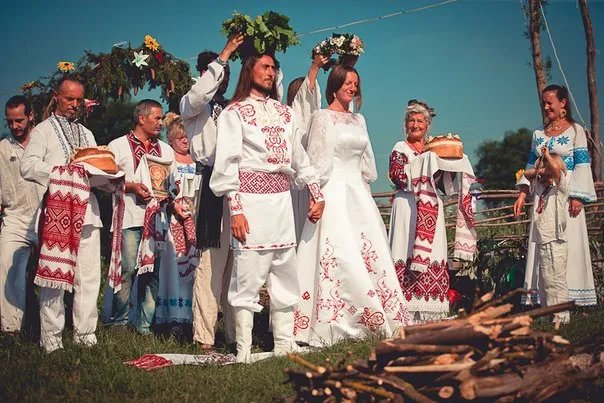
The last stage of the wedding ceremony was the wedding night, which included the bride's dressing up and going out to meet the guests. The bride's dressing up took place in the pantry to the accompaniment of folk songs. In order to show the woman's belonging to the new family, she would light the stove, cook dinner, and show her housekeeping skills to her mother-in-law. The second day after the wedding was accompanied by "ryadzheniem," where all the guests and relatives would perform a theatrical performance, dress up as various animals and characters, and go to their parents' house for pancakes with dances and songs. An interesting tradition is the theatrical performance of a "fake bride" (usually played by the groom's friend), who would prove to her mother-in-law that she was the real daughter-in-law, until the real bride came out.
The official end of the wedding and the beginning of the marriage was the "thanksgiving" ceremony, where the families of the newlyweds visited each other and treated them to various gifts. This ceremony signified the creation of a new joint family.
In various ethnographic regions of Ukraine, these customs and traditions have changed over time and been supplemented with new rituals.
During wedding receptions, rituals with game elements and songs are still preserved to this day, and in modern times they have been supplemented by the tradition of stealing the bride's shoes and a number of others. Therefore, we can conclude that wedding rituals vividly reproduce the ethnic characteristics of each region of Ukraine and their attitude to marriage, and show the diversity and multifacetedness of Ukrainian traditions. Wedding rituals occupied an important place in the customs of Ukrainians, because they were closely connected with the creation of a new family, sanctioned the newlyweds to live together and the right to procreate.