
In search of their roots, researchers try to use various sources of information to reconstruct the family tree and form a complete family tree. As a rule, researchers begin their work by collecting oral testimonies about ancestors from their relatives, and then look for information in birth records in archives. However, in addition to the information that exists in the family and archival documents, an important component of genealogical research is the use of special historical, local history and reference literature. We have selected 7 books and multi-volume editions that will help in researching family trees and genealogy:
1. "Rehabilitated by history"«
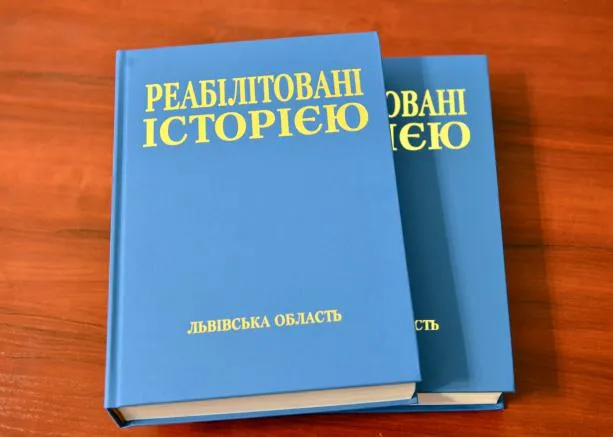
The series of scientific and documentary publications "Rehabilitated by History" was created with the support of the Security Service of Ukraine, the Ukrainian Cultural and Educational Society "Memorial" named after V. Stus and the Institute of History of Ukraine of the NAS of Ukraine. The board of editors-in-chief of this series of scientific and documentary publications was approved by the Cabinet of Ministers of Ukraine on September 11, 1992, at the same time, boards and groups of scientific editors were created, which were engaged in the preparation of volumes on individual regions.
The structure of each regional volume includes several books. The first volume, as a rule, contains an introductory research article, where special attention is focused on the features of the functional political apparatus of the USSR regime within the region. Also published are historical essays on the features of the functioning of the repressive system in the region and articles about individual repressed state, scientific and cultural representatives of the country, ordinary workers of cities and villages. The materials reflect the globality and significance of the "social cleansing" in Soviet society. The section "In the Language of Documents" publishes historical sources that reflect the methodology of the activities of the USSR state security services.
However, for a genealogist, the thousands of alphabetically arranged short biographical notes of victims of repression with links to original sources are of particular value. Among the published biographies, it is possible to come across your own relatives or fellow villagers.
The authors planned to include 27 volumes, and the series, in terms of its publishing format, was to resemble the already well-known publishing project "History of Towns and Villages of the Ukrainian SSR", but the volume of books from each region depended on the number of repressed persons, which at that time numbered in the hundreds of thousands, and on the number of interesting and unique documents that were prepared for publication. Thanks to the work of the authors, the regional features of Soviet state terror were identified, the names of repressed cultural and political activists, government officials, church hierarchs and priests, workers and peasants, representatives of the scientific and creative intelligentsia who died in Stalin's camps were revealed. All volumes are available for download on the website of the Institute of National Remembrance. The publishing project is not yet complete and continues to be replenished with new volumes of publications every year.
2. Book of Remembrance of Holodomor Victims
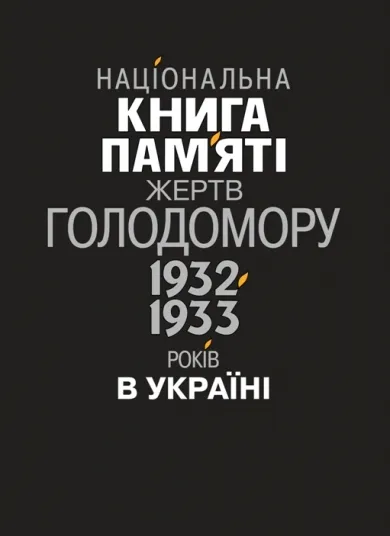
This multi-volume publication was prepared with the support of the Institute of National Remembrance of Ukraine, regional state administrations and regional councils. The "Book of Memory" reflects one of the most tragic events in the history of the Ukrainian people - the artificial famine organized in Ukraine in 1932-1933 by Stalin and his henchmen. Each volume of the publication is arranged according to the geographical principle and concerns individual regions, where information about the victims of the Holodomor is presented in alphabetical order in the form of short martyrologies in accordance with the specific settlements and districts to which they belonged. Information about the victims of the Holodomor was collected both on the basis of archival materials and on the basis of personal testimonies of eyewitnesses. During the preparation of the publication, search groups of researchers were formed in each region to interview still living eyewitnesses of the Holodomor. During the work of the searchers, a huge number of various facts and documentary evidence were discovered regarding the Holodomor in the territories of post-Soviet Ukraine. This information in the "Book of Memory" was included in the form of separate publications of historical sources within each volume. The documents published in the book and used to compile the martyrologies of the deceased are mainly located in the funds of regional archives, the Central State Archive of Public Associations of Ukraine, the Central State Archive of Higher Authorities and Administrations of Ukraine. The publication is valuable for everyone who is interested in this tragic page of Ukrainian history. From a practical point of view, well-written alphabetical indexes to the Book of Memory of Holodomor Victims simplify the search for the necessary surnames and names, and data on the place of birth and residence, age, and nature of occupation of people affected by the famine are a valuable addition to genealogical research.
3. History of cities and villages of the Ukrainian SSR
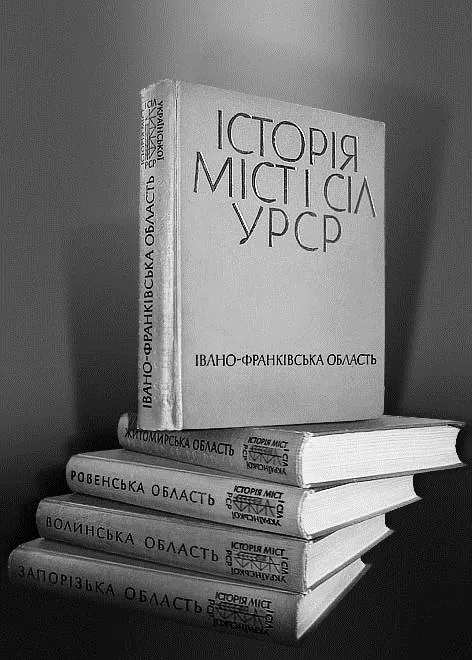
«"History of Towns and Villages of the Ukrainian SSR" is a 26-volume encyclopedic publication containing information about the history of settlements in Ukraine from ancient times to the 1970s. More than a hundred authors, including scientists, archive workers, museum workers, teachers and lecturers, participated in the creation of the publication. The work became a kind of impetus for the development of the local history movement in Ukraine and opened a new direction in the study of historiography and the popularization of knowledge about the traditions, history and culture of the native land. During the writing of the book, more than 3.5 thousand archival files and other documents were studied on the history, culture and education, material production and socio-political relations of individual regions of Ukraine. Therefore, this book can be useful for researchers who are interested in the sources contained in the regional state archives of Ukraine on the history of specific settlements, because the work contains relevant references. In addition to archival sources, the creation of the "History of Towns and Villages of the Ukrainian SSR" used the historical and local history heritage deposited in the library funds of Ukraine. Considering the use of a huge information base, as well as resolutions, decrees, regulations, reports, statutes, accompanying notes, encyclopedic directories, photo albums, memoirs, statistical collections and other documents, this book must be used in local history and genealogical studies. For a genealogist, the "History of Towns and Villages" is important because it helps to clarify the historical context in which the history of the family itself developed, to understand changes in the administrative affiliation of settlements where ancestors lived, as well as the social, ethnic, religious characteristics of the inhabitants of these settlements in historical retrospect. If you're lucky, you might come across mentions of individual representatives of the family under study in the "History of Towns and Villages".
At the same time, modern researchers should take into account the strong ideological bias of the publication "History of Towns and Villages", where the history of the development of settlements is presented through the prism of class struggle, branding with bourgeois nationalism the participants of the liberation struggles of 1917-1921, the messianic role of Russia in the history of Ukraine, etc. Some information, such as the oldest mentions of settlements, is outdated, so the results of more modern local history studies should also be taken into account.
4. Consolidated catalog of metric books stored in the archives of Ukraine.
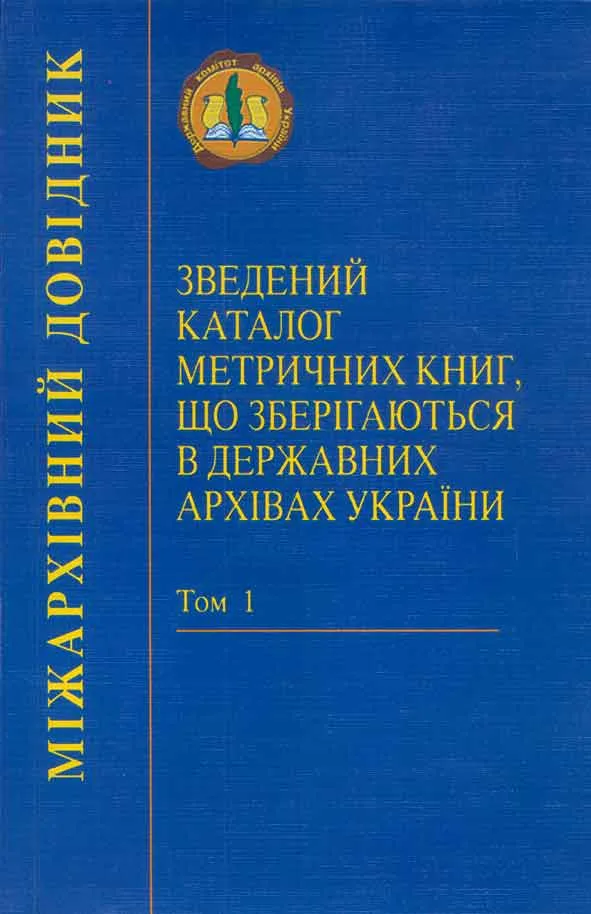
Interarchival directory metric books, stored in the archives of Ukraine, was published by the editorial board of the series "Archival Collections of Ukraine" and includes information on collections of metric books from state regional and central archives of Ukraine. The first volume of the publication was published in 2009 and contained data on metric books from the funds of the state archives of the Volyn, Dnipro and Transcarpathian regions. The publication is primarily addressed to historians, journalists, genealogists, archivists and local historians. For the convenience of using the directory, the names of cities and villages are presented in alphabetical order. So-called reverse indexes have been compiled for individual localities, thanks to which, having data on the modern name of the settlement, the researcher can find its older name. In addition to the name of the settlement, the name of the temple where the metric book was kept is given, and then a list of archival files and the chronological boundaries that these files cover is already included. It is important that the directory indicates the fund number and description in which this file is stored. Therefore, a researcher can come to the archive with a pre-prepared list of cases needed for research, or pre-order them for issuance to the archive reading room.
It is worth emphasizing that the consolidated catalog of birth and death records does not contain surname indexes, but only provides information on the state of preservation and signatures of birth and death records of a particular regional archive. However, this is a very valuable publication, because on its basis it is possible to determine in advance the potential of future genealogical research, without directly contacting the archive. We should add that after the compilation of many indexes, birth and death records continued to arrive at the archives from the Civil Registry Office departments, so the information presented in the directories may not be complete. Therefore, if there are no birth and death records for the settlement you are interested in, and especially if these are materials from the first third of the 20th century, in this case it is still necessary to clarify whether the birth and death records have been transferred to the archive in recent years. As for further genealogical searches, after finding out from the directory whether there are preserved materials and their signatures, the researcher needs to start searching in the state archives themselves, where the relevant information is stored.
5. Lysenko S., Chernetsky E. Right-Bank Gentry (late 18th – first half of 19th century): List of the Gentry of the Volyn, Kyiv and Podolsk Provinces, whose Noble Rights were Checked by the Central Revision Commission. – Bila Tserkva: Publ. O. Pshonkivsky, 2007. – 448 p.
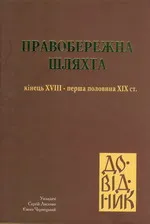
The directory is an important source for the social history of the nobility of the Right Bank of the late 18th - first half of the 19th century. The publication reflects the fate of the nobility of the Kyiv region, Podillia, Volhynia, Vasylkiv and Makhnov counties, which after the divisions of the Polish-Lithuanian Commonwealth were doomed to lose their class privileges (declassification), or were able to integrate into the social structure of the nobility of the Russian Empire. The basis of the book is an alphabetical index of hundreds of noble families who proved their noble origin and the right to hold a noble title before a special commission. Some were lucky enough to prove it, and some were not, but still, if the family under study has noble roots in the Kyiv region, Volhynia or Podillia, this publication can provide important clues when searching for documents on the history and genealogy of the family in the 18th - mid-19th centuries. Therefore, this reference publication will primarily help researchers who study the genealogy of noble families.
6. Redko Yu. Dictionary of Modern Ukrainian Surnames in Two Volumes. – Lviv, 2007.
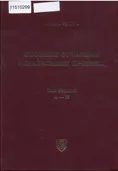
The two-volume dictionary contains information on the origin and distribution of modern Ukrainian surnames. The author of the book, Yulian Redko (1905-1993), was a doctor of philological sciences, a well-known Ukrainian linguist, a specialist in Ukrainian anthroponymy, a writer and translator. During his lifetime, he published the book "Modern Ukrainian Surnames", where he tried to explain their origin and meaning, illustrated the geography of distribution in Ukraine. The publication also contains data on the semantics, spelling, declension and correct accents of Ukrainian surnames. After the death of Yu. Redko, his Dictionary of Ukrainian Surnames was published, the material for which the author collected by questionnaire method in all regions of Ukraine for ten years. A large number of people, including students of philological faculties, helped in collecting the materials. While working on this project, the author set himself the goal of examining the origin of Ukrainian surnames, their word-forming structure, and the geography of their distribution on the territory of Ukraine. This included the findings published in his book "Modern Ukrainian Surnames.".
The history of a surname is an indispensable component of family history. Therefore, when working on a family tree, a researcher should use such a type of publication that allows a professional to understand the original meaning of a family surname. Of course, the dictionary has certain shortcomings and inaccuracies. Not all surnames can be found there. However, using the Dictionary of Modern Ukrainian Surnames can give researchers an impetus for a more accurate and in-depth study of genealogy and family history.
7. Zosimov A. Dictionary of Ukrainian Surnames. – Kharkiv, 2015.
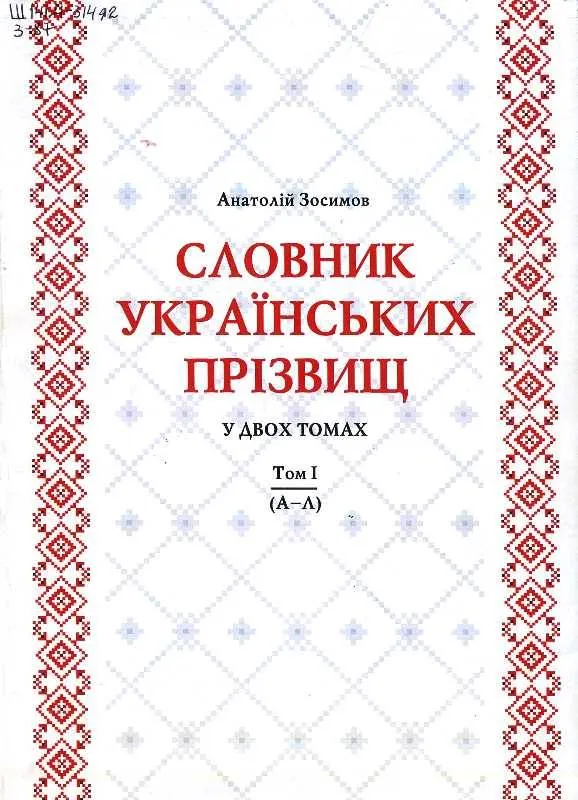
Almost every person is interested in the roots of his personal surname, because it is an integral part of ancestral genetics and national mentality, which is transmitted by social inheritance. Traditionally, surnames were formed from nicknames that reflected the specifics of a person's genotype and separated them from their environment. The dictionary of Ukrainian surnames by Anatoly Zosimov presents more than 100 thousand Ukrainian surnames, from the beginning of the 19th century. to the present day, and their variants, including pronunciation and spelling. The basis of the information base was materials from libraries, telephone directories of cities and towns of Ukraine, Belarus, Russia, and even Canadian and Australian dictionaries of Ukrainian surnames. The author worked on the "Dictionary of Ukrainian Surnames" for more than 15 years. The book also provides variants of the origin and meaning of surnames similar in sound and those that originate from the names of a specific locality where the first bearers of the surname lived. Using the information provided in the dictionary, the researcher has the opportunity to find the origins of the personal surname under study and its original interpretation, as well as to outline the territorial boundaries of its distribution.
What other books do you use when researching your family tree and genealogy? Please share your information in the comments.