
In previous publications we already wrote about Martin Pollack – an Austrian publicist, the author of the famous book «To Galicia», where he presents a vivid and non-trivial panorama of life in Galicia in the 19th century. In the book «The Emperor of America», Martin Pollak focuses on a new interesting topic – the emigration of the population from Galicia. This mass phenomenon covered the region from the last quarter of the 19th century. and lasted practically until the beginning of World War II. Emigration was provoked by overpopulation, poverty, limited opportunities for earning money and employment. Not only Ukrainians, but also Poles and Jews left in search of a better life. In the 1880s, 60% of all migrants from Galicia were Jews, and this despite the fact that they made up 101% of the population. Between 1881 and 1910, more than a quarter of the Jews of Galicia visited the USA. Residents of Galicia mainly traveled overseas to America – both North and South.

The search for a better life overseas was primarily driven by the poor financial situation of Galicians. The expression Galician poverty became a catchphrase in the Austrian Empire. As a result of the demographic boom of the last quarter of the 19th and early 20th centuries, the peasants were catastrophically short of land. Large families of poor people and day laborers often had only one fur coat and one pair of warm boots for the whole family, so that in winter only one person could leave the house. Many children did not even have their own shoes under the age of ten, let alone a fur coat. The cost of living in Galicia was higher, and salaries were lower than in other lands of the empire, because Vienna considered this region primarily as a raw material base and a profitable sales market. Officials, who received low salaries, did not disdain bribes and openly abused their official position.
Under such conditions, promises of the riches of the overseas region, stories about the American emperor, who generously distributes his lands to all visitors, became a ray of hope for a better life for Galicians desperate with poverty. Martin Pollack tells in detail how exactly the emigration across the ocean took place in his book. Here you will find stories about the peculiarities of the recruitment of peasants willing to leave, how corruption, abuse, fraud flourished in this, and how dangerous and adventurous the journey of a peasant who had never been further than his county town in his life was.
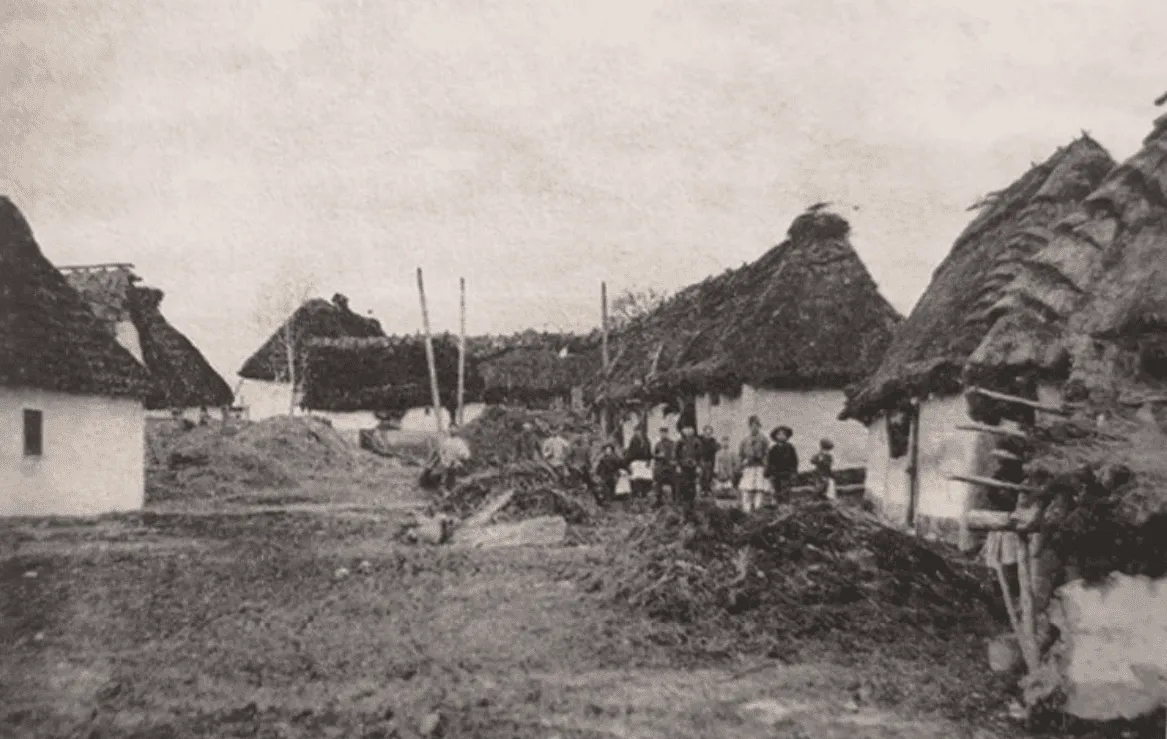 Galician village at the beginning of the 20th century.
Future emigrants had to work hard to save money and perhaps sell a few heads of cattle or a field, and go into debt to buy the coveted steamship ticket. The mass transportation of people to America became a powerful business. To support it, the owners of the steamship companies created a wide network of ticket sales through their agents in Eastern Europe. Local recruiters, in turn, hired numerous subagents and other assistants, so that the result was an extensive network, laid in the most remote hamlets of the Carpathian valleys, thanks to which new emigrants were brought to Hamburg and filled with them on ships. The recruiters quickly gained a reputation as human traffickers, treating migrants like cattle to be driven to where the smell of big money was.
The whole adventure was just one trip to the port of departure. Ships with migrants departed mainly from Hamburg, Germany. In order to get there, a resident of Galicia - an Austrian citizen - had to get a passport, get permission to travel abroad, get to the German border, which was mostly crossed at the checkpoint in Auschwitz. Then they had to get to Hamburg and wait for the ship to leave. Along the way, migrants encountered scammers, the arbitrariness of officials and the police, and robbers. Therefore, it is not surprising that the safest stage of the journey was the very crossing by ship to America, which lasted 14 days. Arriving on the shores of America, migrants had to undergo quarantine on Ellis Island (if the ship arrived in the USA) and, having received permission to disembark, finally got to the dreamed-of America.
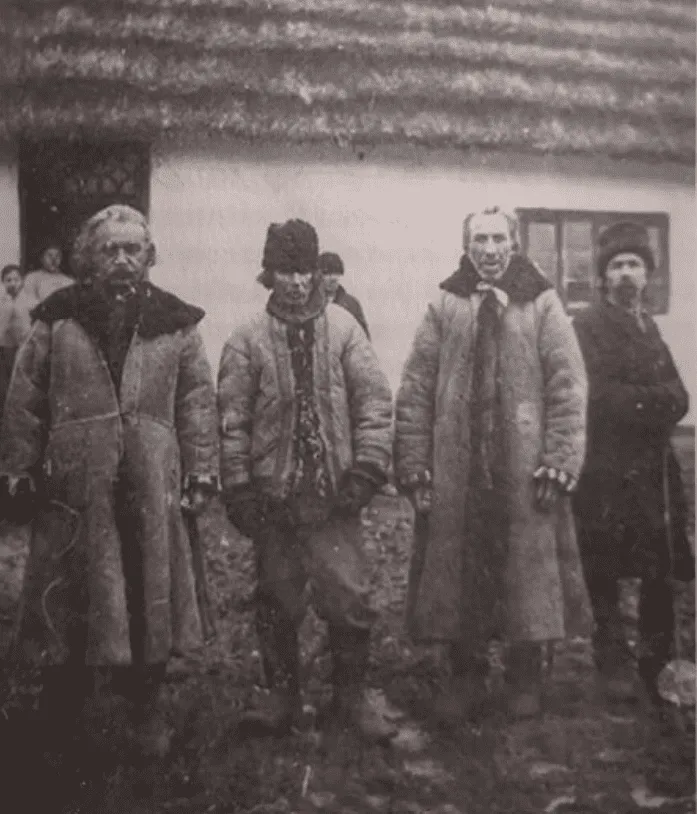
Galician peasants of the early 20th century.
Those who ended up in North America were more fortunate. However, here the migrants had to work hard. The work of Galician Ukrainians or Jews was worth less than the work of migrants from Western European countries. Many Ukrainians found work in mines or at steel mills in Pennsylvania, where they worked hard for low wages and in dangerous conditions. At the turn of the 19th and 20th centuries, the wage for a 12-hour workday was mostly $1. Still, the "Americans" who happily returned home stood out favorably from their fellow villagers - they could eventually buy land and pay off debts. Those who gained experience traveling abroad for work could go to America and return home several times, until they permanently took their entire family overseas.