
The traditions of birth and baptism of a child in Ukraine date back to ancient times and are usually divided into several stages: prenatal rites, birth of a child, and the process of accepting a newborn into the family, baptism. It was believed that rituals and ceremonies ensure the well-being and health of the mother and child and their happy future. Prenatal customs were performed even during marriage, when the newlyweds were wished the birth of children and fertility. Such traditional rituals include the rite when the bride's braid was untied and the wedding night was arranged on unthreshed sheaves.
The period of pregnancy of a woman was considered especially responsible, and usually they tried to hide this condition as long as possible so that any phenomena did not affect the development of the fetus. It was desirable for a pregnant woman to avoid contact with sick and ugly people, cripples, and injured people so that all these qualities were not transmitted to the future child. It was also believed that a woman during pregnancy should not be denied any request, and relatives tried to fulfill them, because the psychological and physical state of the mother certainly had an impact on the child.
Back in the 19th and 20th centuries, home births without the participation of outsiders were traditional. The bed where the woman gave birth was fenced off with a special cloth to hide it from evil eyes, a so-called "curtain" was made. Usually, a midwife-midwife took the delivery (in birth records you can often find information and the name of the midwife who took the delivery). In each region of Ukraine, she was called in her own way: a midwife, a midwife-midwife, a midwife-cutter, a midwife, etc. In most cases, successful childbirth and the health of the fetus and mother depended on her skills and abilities. Therefore, the midwife enjoyed special respect and authority among the people.
In addition to giving birth, the midwife performed a number of ritual actions: untied knots, unbraided braids, and cut the umbilical cord with special tools - an ax or a spindle - so that in the future the child would have the abilities and skills for agricultural work. The midwife also buried the place (postpartum) and gave the newborn his first bath. If the child was born weak and dying, the grandmother had the right to baptize him. After giving birth, the midwife tied the umbilical cord with a hemp rope for procreation, and vice versa, if the family did not want to have children - with linen yarn. In this way, the health, intelligence, and longevity of the mother and her child were tied.
The first bathing of a child was considered a special, even magical ritual, because our ancestors strongly believed in the power of water and its contact with a newborn. It was considered not only a ritual of purification, but also protection from evil spirits and evil spirits. Various herbs, grains, bread, even money (silver or gold coins for well-being) were added to the water. For girls, honey was added to the water, and for boys, sometimes a drill was also added, so that in the future he would be a jack of all trades (usually such an element of the ritual was common in the Boykiv region). If someone entered the house at the time of the first baptism, they were obliged to throw a coin into the water so that the child would be healthy and happy. After the end of this ritual, the water was poured into a corner where no one would look.
In addition to the ritual of bathing the child, there are also rituals of cleansing the mother, because after giving birth, a woman was considered "unclean" and it was undesirable for her to go outside and interact with others. According to ancient beliefs, this had a negative impact on the harvest and the family's prosperity.
The rite of purification of the child and mother was tried to be carried out as soon as possible. This tradition began with the pouring of water. Usually, holy water was taken, or morning water from a well (it was also called "unopened"). The midwife sprinkled the child with holy water, gave him water to drink and said prayers. The mother presented the woman with bread, salt, poured water on her hands and gave a scarf or a shawl. This rite was also accompanied by church traditions of the withdrawal 35 days after childbirth. After this period, the mother of the child was considered completely purified.
After the first bath, in some parts of Ukraine, the tradition of drying the baby by the stove and lighting candles has been preserved (especially in Transcarpathia). People believed that the light of the candle protects the mother and baby from evil forces.
A common custom after the birth of a child was a visit from neighbors, friends, and married women of the family, who brought various gifts and products (usually cheese, butter, eggs, kalachi, and porridge).
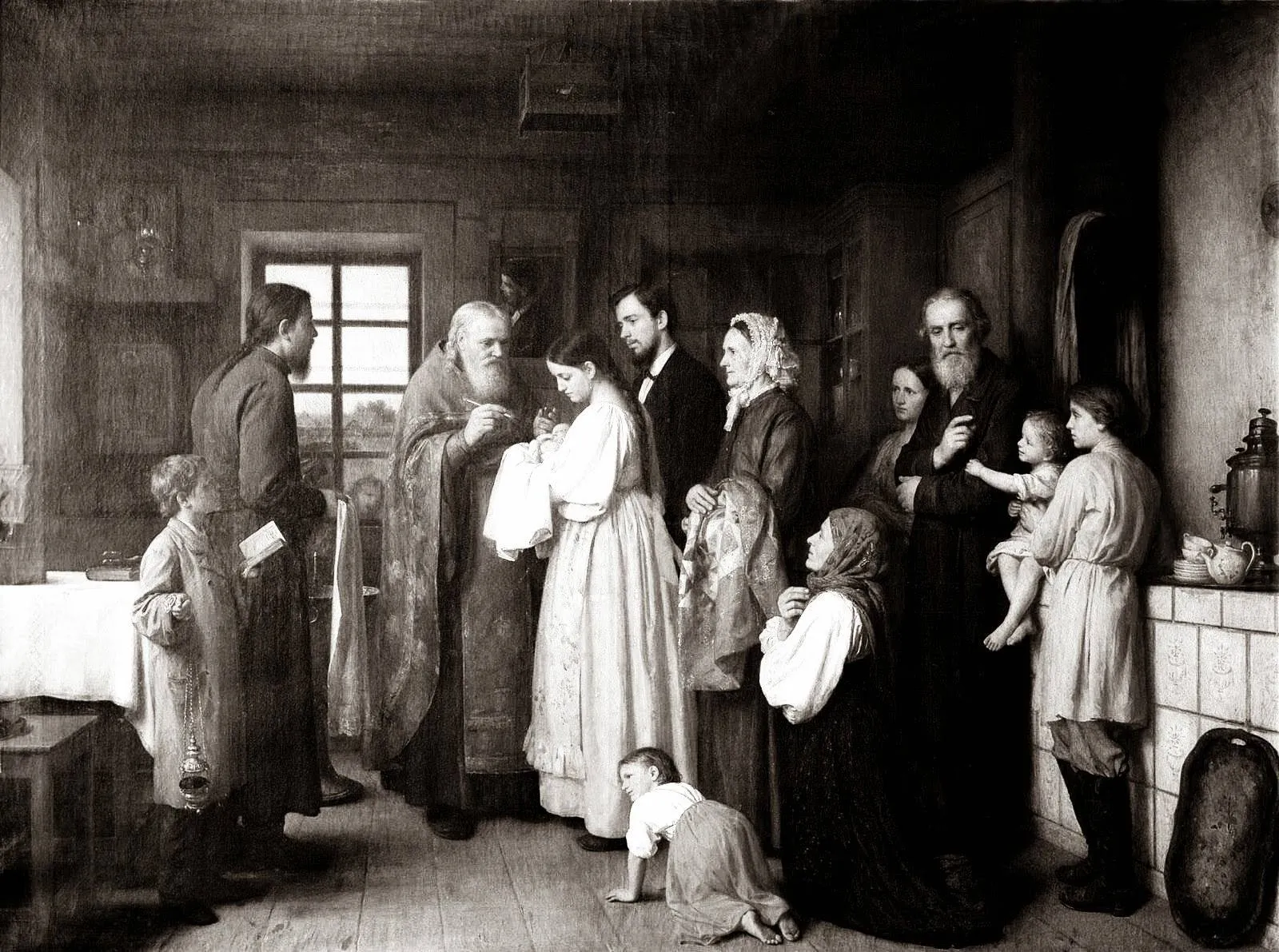
There was a pronounced tendency to choose a name for the child that corresponded to the church calendar or the name of another relative - most often a grandmother or grandfather. The baptism was carried out with the participation of godparents - godparents of the baby. They were usually chosen from a circle of friends or family, sometimes several couples.
When children often died in a family, in order to avoid bad luck, there was a ritual of so-called "selling the baby" to the godparents through the window.
Not the least role in baptism was played by the midwife, who prepared diapers and gave the child to the godparents before the ceremony or carried it to the church itself and made sure that the ceremony was performed according to all the rules. Before baptism, traditional amulets, such as garlic, bread or salt, were placed on the child. This symbolized the child's connection with the family and community and ensured a happy life for him.
Godparents and guests were invited to the christening, who brought gifts. In some regions of Ukraine (Podillia, Lemkivshchyna, Transcarpathia, and Polissya), christening songs were an indispensable part of the ceremony, expressing gratitude to the grandmother-midwife and good wishes to the parents and the child.
In the Hutsul region, there was a ritual of cutting a child's hair at christenings, symbolizing their joining the family. Sometimes, after the christening, a kalachyn was also organized - on one of the holidays, the child's parents would come to visit the godparents with kalachyn.
To protect a child from evil spirits and evil spirits, scissors or a knife or needle were placed in her bed, which had magical powers and protected her from the evil eye. A year after birth, the rite of circumcision of the baby took place, sometimes with the invitation of relatives and loved ones. This was done by the godparents, then they buried or burned the cut hair. There was a separate rite of virginal circumcision - braiding the first braid, which was done by the godmother.
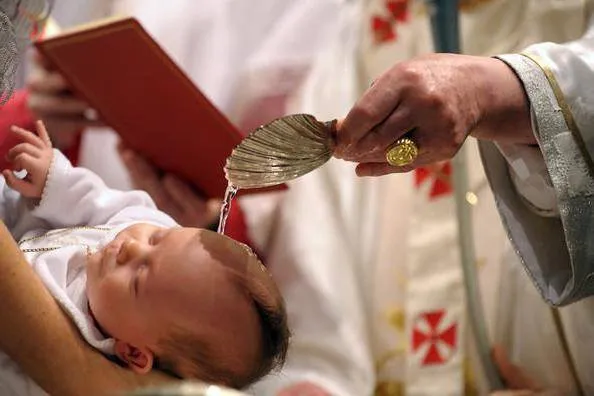
Nowadays, the rites of birth and baptism of a child have changed significantly. Ancient magical rites are now more symbolic than protective and magical in nature. Less and less attention is paid to individual elements and rituals, especially prenatal customs and superstitions related to the purification of a woman after childbirth and her communication with her environment during pregnancy.