
Without exaggeration, the State Archives of Vinnytsia Oblast are currently one of the friendliest towards the average researcher. The archive administration was one of the first in Ukraine to abandon the practice of paying for copying using its own technical means; moreover, photocopying does not require unnecessary documentation, which is why, for comparison, in the State Archives of Khmelnytsia Oblast, researchers are forced to run around looking for signatures on pieces of paper in various offices of the archive from the second to the ninth floor. The State Archives of Vinnytsia Oblast are also actively engaged in digitizing their archival funds - most of the metric books, a significant part of the registry books, and many other materials have already been digitized. All this saves the researcher time, because if earlier it was possible to order only a few metric books with a volume of up to a thousand sheets in one day, now everything depends on how much the researcher himself is able to process during the day.
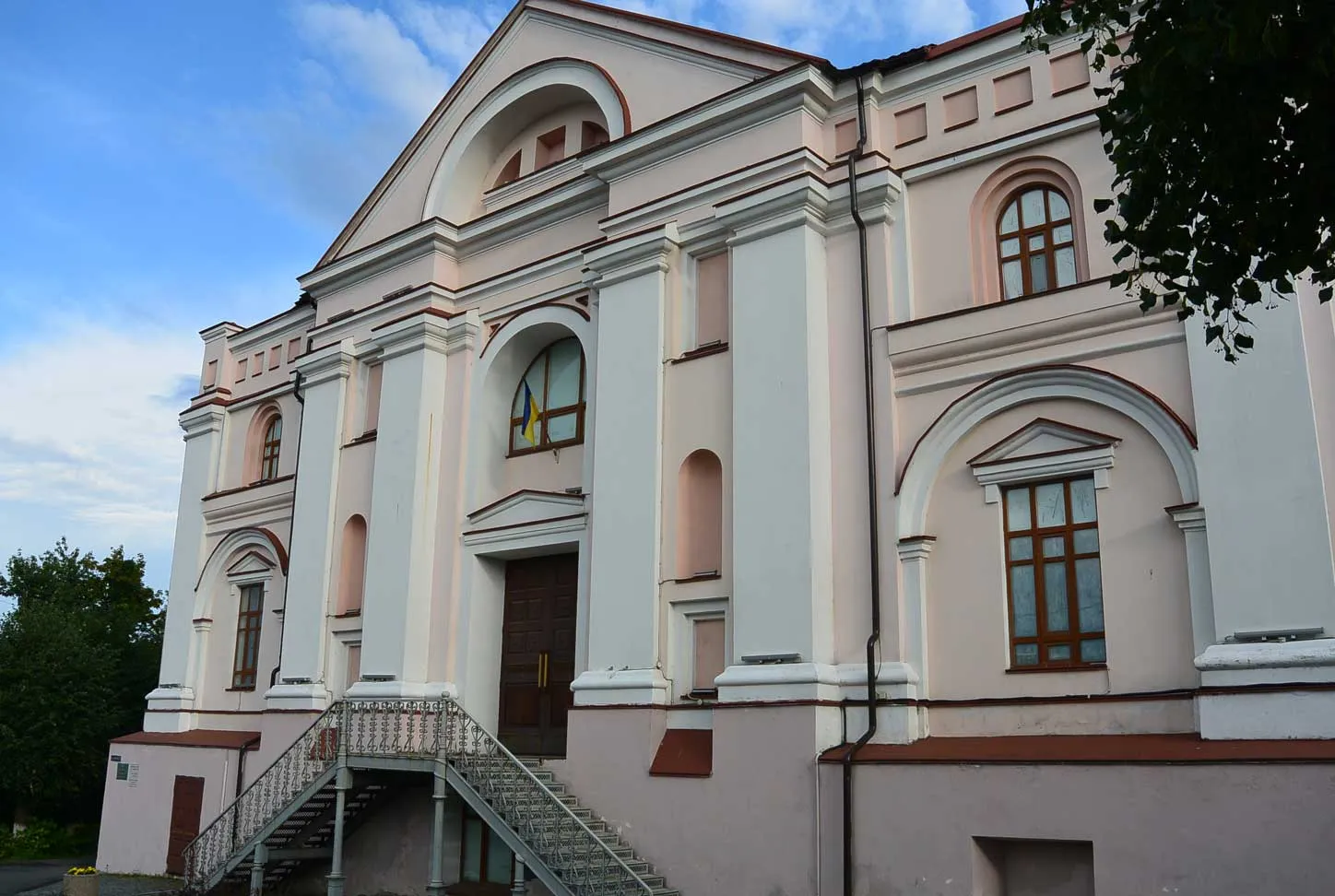
The main building of the state archive of Vinnytsia region
Through the efforts of the archive and with the volunteer help of researchers (Sergiy Fazulyanov), all descriptions of the pre-Soviet period archive have already been digitized, moreover, they are all posted on the archive website in the reference section. Next up is the digitization and publication in free access of descriptions of the Soviet period.
What are the funds of the State Archives of Vinnytsia Oblast interesting for the average genealogy researcher? The main type of documents for genealogical research is usually metric books. Almost the entire territory of the present Vinnytsia Oblast until 1917 was within the boundaries of the Podilskyi Province of the Russian Empire. Therefore, copies of metric books by districts settled in the center of the province - Kamianets-Podilskyi, so now most of them for the period from the end of the 18th century to the 70-80s of the 19th century are stored not in Vinnytsia, but in the State Archives of Khmelnytskyi Oblast. Instead, the Vinnytsia archive contains mostly later metrics from the last third of the 19th century - until 1917, due to the fact that these materials were later transferred by the registry offices for storage in this archive, which was created in Vinnytsia in 1920 under the name Podilskyi Oblast Archive. The collection of registry books can be found in the seventh volume of the Consolidated Catalog of Registry Books Stored in the State Archives of Ukraine. For the period of the 20s-30s, the DAViO presents a collection of books of civil registration acts. Depending on the district, these materials have been preserved in different ways. It is in the registry office books that you can find information about relatives who were born/died, married/divorced in the interwar period.
Regarding the period of the 19th century. interesting sources are the protocols of village meetings. They are not preserved everywhere, but they contain very colorful information about the life of the village community. Peasants gathered to draw up an annual budget for community expenses, to solve issues of education, providing for orphans, and various current economic problems. Each protocol was signed by the heads of families living in the village. Typologically similar information, but already in relation to a certain district of several villages, can be found in the materials of the volost boards. The materials of courts and notaries stored in the DAViO are difficult to find, but extremely interesting.
For many settlements, family lists have been preserved in the DAViO, usually relating to the period from the last quarter of the 19th to the beginning of the 20th century, and for the middle of the 19th century - reviz tales. These sources especially facilitate genealogical research and the reconstruction of the personal composition of the family.
Special attention is paid to the materials of the Soviet period from the 1920s – in Vinnytsia region they are quite well preserved and are surprising in their diversity. In particular, these are the most diverse lists – of villagers, believers of religious communities, lists of villagers with an indication of the stock and livestock they owned. It is very important that these lists indicate nationality. For those who are looking for documents for a Pole’s card – this is simply a ticket to obtaining the desired document. The protocols of village councils, volost boards are no less informative, and for studying the history of the village, statistical information about each settlement in Vinnytsia region is important. The same period includes cases of cooperative farms, which were massively created in Ukrainian villages during the NEP years. It should be noted that there is a lack of such materials from the 1930s – they were probably destroyed during the retreat of Soviet troops in World War II.
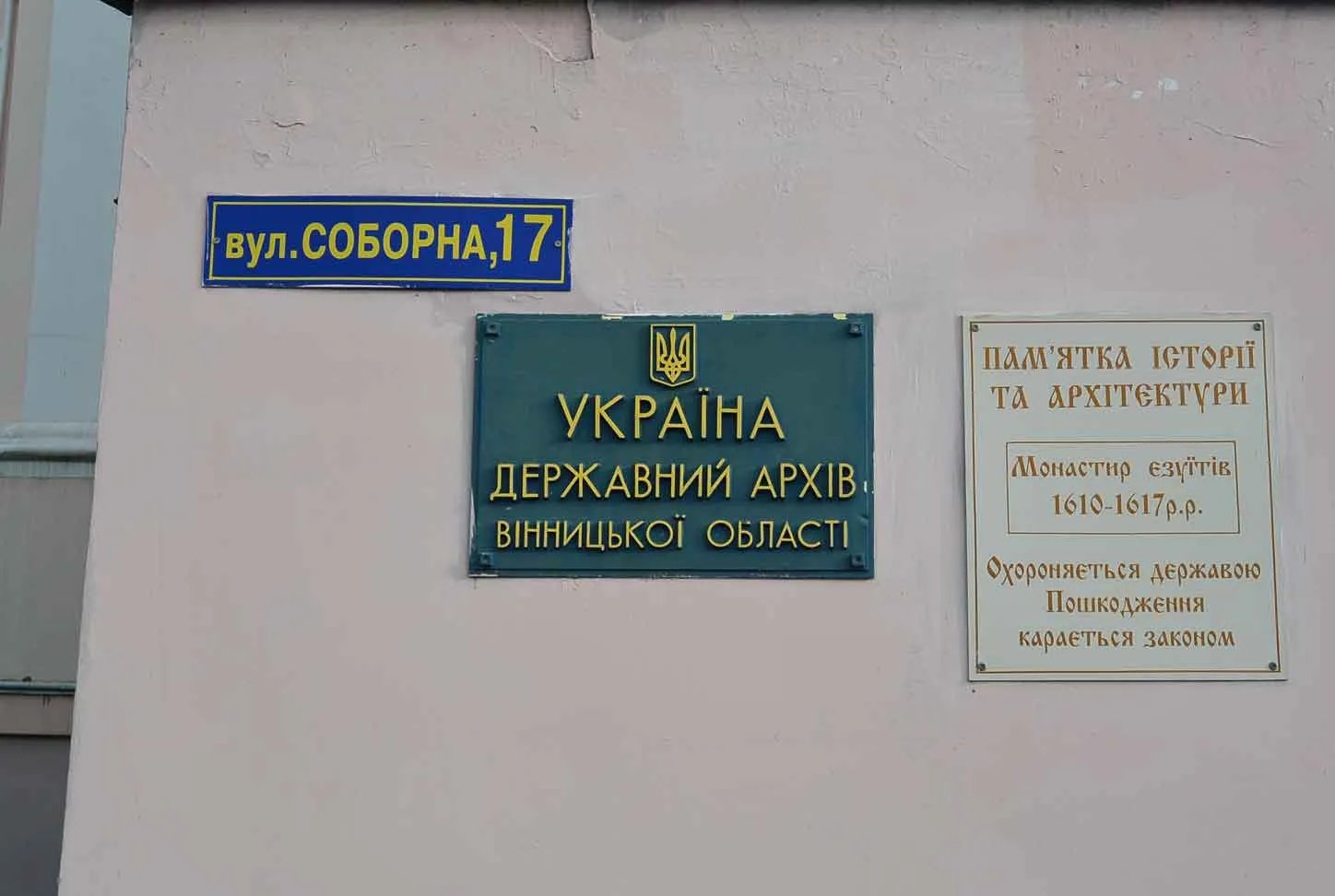
The State Archives of Vinnytsia Region are open to visitors from Monday to Thursday. Friday is a sanitary day. You can place an order by writing a corresponding letter to the archive's email address. It should be added that the State Archives of Vinnytsia Region is the only archive whose geographical catalog is digitized and available on the Internet, so before ordering anything, you should definitely review this resource. The order is executed on average within 2-3 days from the moment of submitting the application. Most of the files are issued in the main building of the archive, which in ancient times was a complex of a Jesuit monastery and church (now in Vinnytsia, at Soborna, 17). However, many materials from the Soviet period are issued in the second building (12 Pirogova Street).
If you are interested in any other information about the State Archives of Vinnytsia Oblast, or would like to share your experience working at DAViO, please write in the comments.